


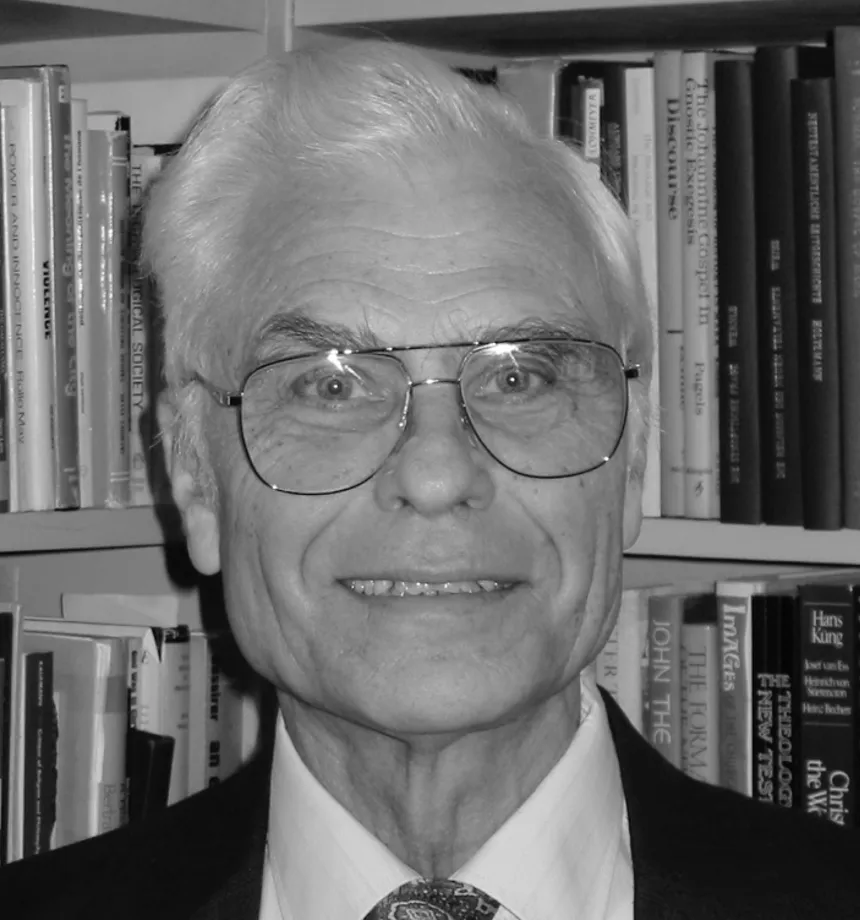
Paul Ciholas


Paul Ciholas was born in France after his parents fled religious persecution in Eastern Europe. His parents came from the old Austro-Hungarian Empire which is now part of Ukraine. At the age of nine, Paul’s schooling stopped abruptly because WWII began.
Soon he was helping to feed his family of nine by pushing a baby buggy full of coal to farms outside his town to trade coal for food. At fourteen, he followed his father and older brother deep into the bowels of the earth to become a coal miner.
At about that time, they learned that Russian prisoners of war, who shared their faith, were being held nearby. Undaunted by the Nazi occupation, Paul’s mother confronted the German commander of the prison and offered to feed the prisoners on Sunday if they let them out for religious services. Under threat of death, if the prisoners escaped, Paul’s family set up religious services for the prisoners on Sundays in their home and called on a Russian preacher in Paris to come and lead the services. When the Russian preacher couldn’t make it because the train lines were bombed out, Paul preached his first sermon in Russian. His mother cooked a hearty stew for them all. She did this every Sunday until shortly after D-Day when the Russian prisoners disappeared. As the German army retreated east, they left no prisoners alive. The realities of war left indelible wounds in the family’s hearts. As Paul wrote in his memoir: “Poverty, hunger, danger, and despair taught us the virtue of self-sufficiency. We also learned compassion. So many were not as fortunate as we were.”
Paul was fifteen when the war was finally over. Peace did not make things much easier. Paul dreamt of a new purpose for his life but was stuck in the coal mines to help feed the family of nine. It would take six more years until he could go to a special school in Paris where he could study with other young men whose education had been interrupted by the war. There he played clarinet in an orchestra, joined an acting group that performed classical plays all over France, helped build a chapel, participated in sports, and earned the nickname ‘Manivelle’ (Handcrank) because, during the war, a German doctor had set his broken right arm so crooked that he could win with unusual spikes at volleyball. At twenty-five, he passed the French “bac” (BA) exam in philosophy and went to an international seminary in Switzerland where he graduated with a degree in theology four years later.
His career as a minister began in Strasbourg, France where half the congregation spoke German and half spoke French. In 1962 he was invited to do deputation work in the US for the American Baptist Convention and preached in churches in Pennsylvania, West Virginia, Kansas, and Missouri. During his five-year ministry in Strasbourg, he also studied theology at the University of Strasbourg and earned a Ph.D. in philosophical theology at age thirty-two.
He served as minister to churches in Strasbourg, Paris, and Washington D.C. While Paul was interim pastor at Briggs Memorial Baptist Church in Washington D.C., he was invited to open the U.S. Senate Session with prayer on June 7, 1967. It was in the middle of the 6-day war in Israel, and tensions were high. At the time, Lyndon Johnson was President. A statement of gratitude to Paul from the Senate was signed by Vice-President Hubert Humphrey.
After teaching New Testament for a year at a Seminary in Louisville, Kentucky, he taught courses in theology and philosophy at Campbell University in North Carolina. Seven years later at the University of Kentucky, he taught in the Honors Program and developed Great Books courses for Kentucky State University where he directed the Institute for Liberal Studies.
Paul is the author of four books, scholarly articles in French and English, and several studies of Greco-Roman antiquity and early Christianity.
Paul also had a special passion for woodworking. Creating beautiful furniture provided a satisfying balance to his work as professor, theologian, and writer. Paul made most of the furniture for the family and built two houses and a separate shop.
He is survived by his wife Karin Nordenhaug Ciholas, by two sons, Mike and Phil, by two daughters-in-law Deborah Hwang and Bonnie Johnson, by one brother, three sisters-in-law, and by many nieces and nephews.
Paul is known as one of the oldest trike riders in Sarasota. With a little help from a dear neighbor, he transferred from his wheelchair to his tricycle for his almost daily “tour de Serenoa.” There were no batteries involved except for his pacemaker. Faith, grit, and determination always kept him going. When people remark on Paul’s achievements, he points to his father who never had the privilege of spending a day in school and still learned to read his Bible in five languages.
Memorial donations can be made to Médecins sans Frontières (Doctors without Borders) or Tidewell Hospice in Sarasota. A Celebration of Life will be held in September.
Help by Sharing


Condolences
We’re Here to Help
This obituary is offered by Clearview Cremation as part of our commitment to honoring legacies with dignity and care. If your family is navigating end-of-life planning, we’re here to offer support, guidance, and full transparency.






Lorem ipsum dolor sit amet, consectetur adipiscing elit. Suspendisse varius enim in eros elementum tristique. Duis cursus, mi quis viverra.